
For decades, the Indian music industry had one clear centre of gravity—Bollywood.
Film soundtracks shaped charts, introduced artists, and dominated how audiences discovered music. Success in music often meant becoming part of the film ecosystem.
But something has been changing.
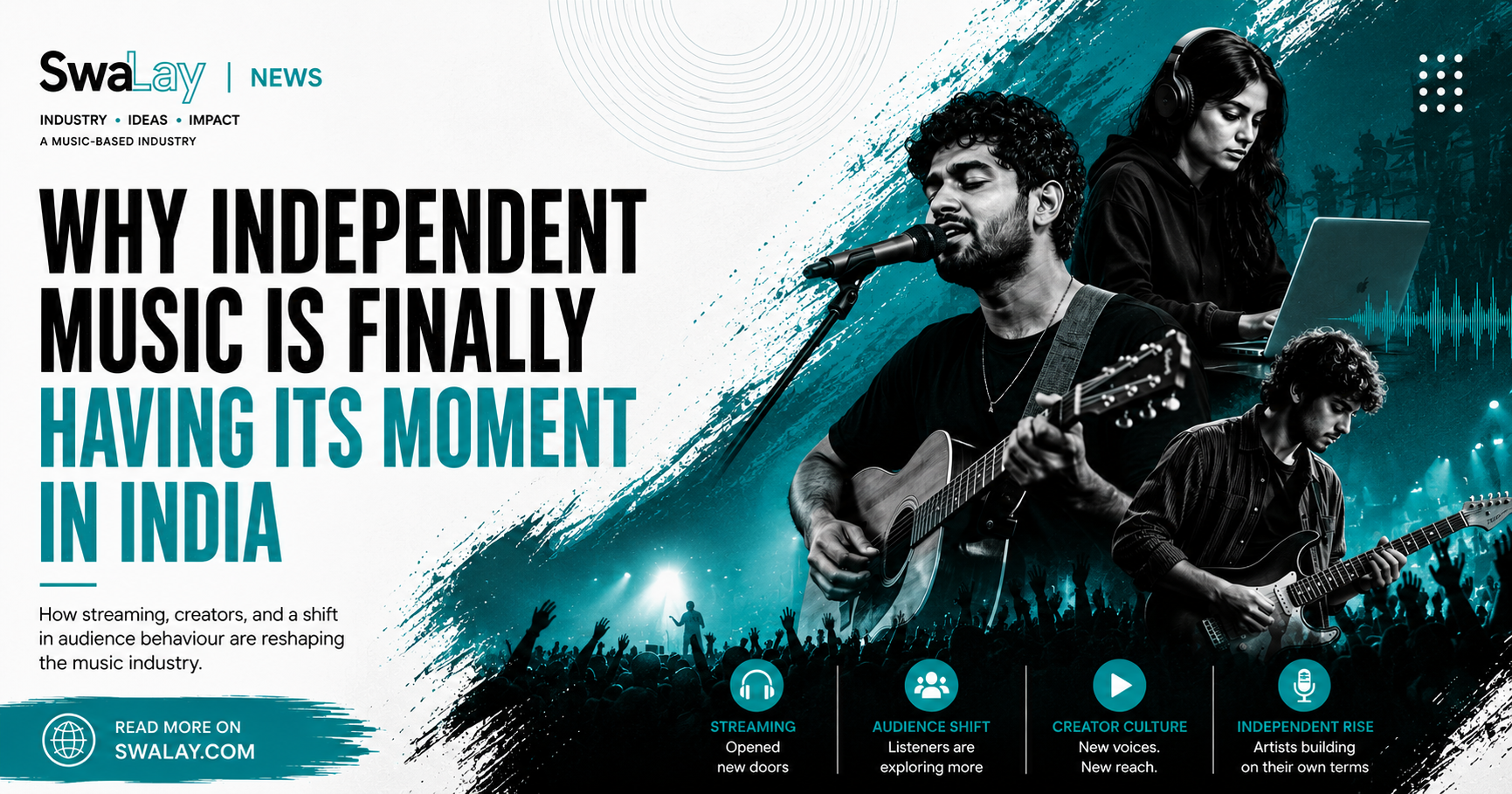
Independent music in India is no longer operating at the margins. It is becoming a powerful cultural force of its own—driven by streaming platforms, creator-led discovery, evolving audience behaviour, and artists choosing ownership over tradition.
This isn’t a trend anymore.
It’s a shift.
The Streaming Revolution Changed Everything
One of the biggest reasons independent music is growing is simple: distribution is no longer limited.
Earlier, reaching listeners required labels, film placements, radio access, or major industry connections. Today, artists can release music directly through streaming platforms and reach audiences across cities and even countries.
Listeners are no longer waiting for albums attached to films.
They are actively searching for moods, sounds, artists, and stories.
Playlists have quietly replaced movie soundtracks as discovery engines.
That shift opened doors for artists who may never have followed the traditional path.
Audiences Are Listening Differently
Indian listeners today are more curious than ever.
Instead of consuming only what appears in mainstream media, audiences are building personal playlists and discovering music through recommendations, live sessions, short-form content, and digital communities.
The result?
Music taste has become more individual.
People now move easily between Bollywood tracks, independent releases, global artists, regional sounds, and experimental genres—sometimes within the same playlist.
Independent artists are benefiting from that openness.
They are no longer competing for a single spotlight.
They are building communities.
Creators Have Become the New Music Gatekeepers
The rise of creators and digital content has changed how songs travel.
A track no longer needs a movie release to become culturally relevant.
Sometimes one performance clip, one acoustic session, or one moment online is enough to introduce an artist to millions.
This has created opportunities for emerging musicians who focus less on mass appeal and more on authenticity.
Artists are growing audiences before signing deals.
And in some cases, they are choosing not to sign at all.
Independence Is Becoming a Business Model
Independent music today is not just an artistic decision—it is increasingly a strategic one.
Artists have more control over their identity, release schedules, collaborations, and audience engagement.
That doesn’t mean the path is easier.
Independent careers demand consistency, self-management, and long-term vision.
But for many artists, the ability to create without fitting into traditional expectations is becoming worth the trade-off.
Success is being measured differently now.
Not only in chart positions—but in loyal audiences, sold-out shows, and sustainable careers.
What This Means for the Indian Music Industry
Independent music rising does not mean Bollywood music is disappearing.
It means the ecosystem is expanding.
India is entering a phase where multiple music cultures can exist together—film music, regional music, independent releases, digital-first artists, and global collaborations.
And that may be the most exciting change of all.
Because when artists have more freedom and listeners have more choice, music becomes bigger than one industry.
It becomes a culture.