Every song released on digital streaming platforms carries more than creativity. It also carries legal ownership, licensing responsibilities, and copyright protection. While artists often focus on creating and releasing music, few understand what happens when a platform identifies a potential copyright issue.
When streaming services such as Spotify, Apple Music, or other digital stores detect or receive a copyright complaint, they notify the music distributor responsible for delivering the content. At that point, the distributor is legally required to respond in accordance with platform policies and copyright regulations.
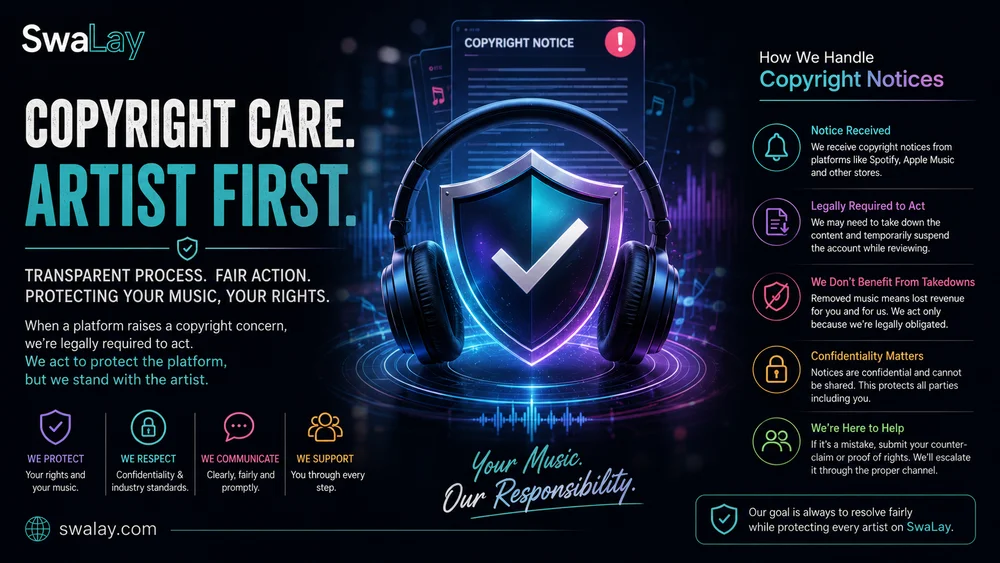
Contrary to common misconceptions, distributors do not remove music because they want to. They act because they are obligated to comply with legitimate copyright notices. Ignoring such notices could jeopardize their relationships with digital platforms and ultimately affect every artist who relies on those services for distribution.
Another important aspect of this process is confidentiality. Copyright notices received from streaming platforms often contain sensitive information, internal reference details, and legal communications that cannot be shared publicly. This is an industry standard followed by distributors worldwide to protect the privacy and rights of all parties involved.
However, transparency remains equally important. Responsible distributors keep artists informed by identifying the affected release, explaining the nature of the issue as clearly as permitted, and guiding them through the next steps. If an artist believes a claim has been made in error, they have the opportunity to submit supporting documents such as ownership records or licensing agreements for further review.
At SwaLay, we believe that trust is built through clear communication and responsible action. Our role extends beyond distributing music to digital platforms. We work closely with artists to ensure their rights are protected while complying with the legal standards required by global streaming services.
Copyright protection is not designed to create obstacles for artists.
It exists to safeguard original creativity, encourage fair ownership, and maintain the integrity of the music industry. By understanding the copyright process, artists can release their music with greater confidence, knowing that both their work and their rights are being respected every step of the way.