For years, independent artists have searched for alternatives to the traditional music industry model.
Major labels controlled distribution. Streaming platforms controlled discovery. Algorithms increasingly influenced visibility. While these systems opened new opportunities, they also created new challenges—especially for artists seeking ownership, creative freedom, and sustainable income.
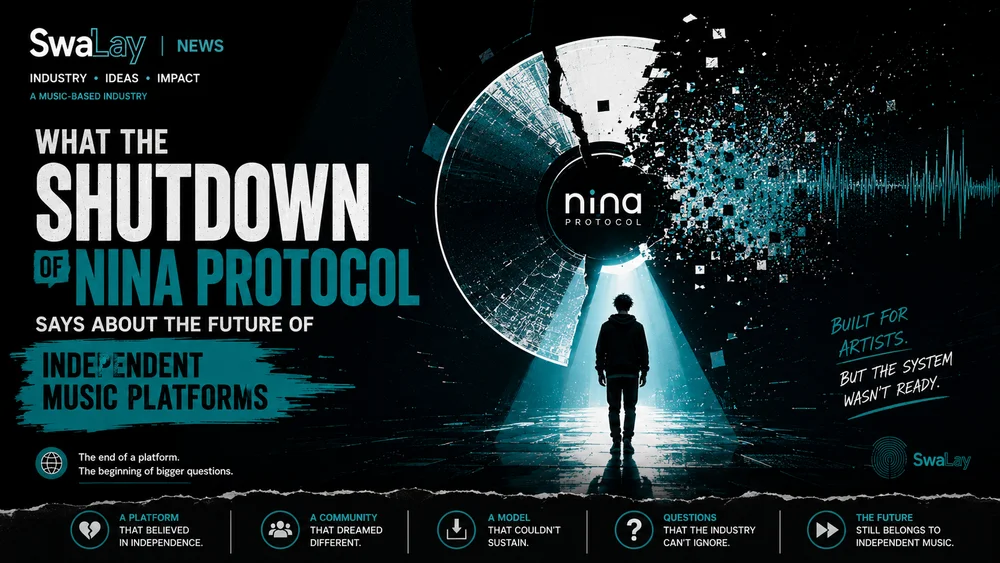
Nina Protocol emerged as one of the most ambitious attempts to change that reality.
Built as an independent music platform, Nina promised a different future: one where artists could share music directly with audiences, maintain greater control over their work, and participate in a more transparent digital ecosystem.
However, the platform's recent shutdown has sparked an important conversation across the music industry.
The question is no longer why Nina Protocol failed.
The real question is what its closure reveals about the future of independent music platforms.
A Bold Vision for Independent Artists
Nina Protocol was created with a mission that resonated strongly with independent musicians.
At a time when many artists were questioning the economics of streaming, the platform offered an alternative model focused on ownership, community, and direct artist-to-fan relationships.
Its vision aligned with a growing movement within the music industry: empowering creators rather than intermediaries.
For many independent musicians, Nina represented hope that technology could help artists regain control over their careers.
Yet even the most innovative ideas face a difficult challenge—sustainability.
Innovation Alone Is Not Enough
The music industry is filled with platforms that began with promising ideas.
The challenge is rarely attracting attention.
The challenge is keeping artists and listeners engaged long enough to build a viable ecosystem.
Independent platforms compete against industry giants that already possess massive user bases, sophisticated recommendation systems, extensive licensing agreements, and substantial financial resources.
For a smaller platform, offering a better vision is often easier than competing with the convenience of established services.
Nina Protocol's closure highlights a reality many startups face: innovation matters, but scale matters too.
Without a critical mass of artists, listeners, and revenue, even strong ideas struggle to survive.
The Growing Demand for Artist Ownership
Despite Nina's shutdown, the issues that inspired its creation have not disappeared.
In fact, they may be more relevant than ever.
Artists today are increasingly focused on ownership, transparency, and direct audience relationships.
Independent musicians are no longer satisfied with simply uploading songs and hoping algorithms work in their favor.
They want greater control over how their music is distributed, monetized, and discovered.
This shift is creating new opportunities for platforms, communities, and services that prioritize artist empowerment.
The demand exists.
The challenge is building business models capable of supporting it.
Why Community May Matter More Than Technology
One of the biggest lessons from Nina Protocol's story is that technology alone cannot build a music ecosystem.
Music has always been about people.
Listeners follow artists they connect with. Fans support communities they feel part of. Musicians thrive when they have meaningful relationships with their audiences.
The most successful platforms of the future may not be those with the most advanced technology.
They may be the ones that create the strongest sense of community.
This is where the independent music movement continues to evolve—from audience acquisition to audience connection.
What This Means for the Future of Independent Music
The shutdown of Nina Protocol should not be viewed as a failure of independent music.
Instead, it should be viewed as a reminder of the challenges involved in building alternatives within an industry dominated by global platforms.
Independent artists are still growing.
Live music continues to expand.
Direct-to-fan models are becoming more common.
Creator-led communities are gaining influence.
The appetite for independence remains strong.
What the industry needs now are sustainable systems that balance innovation, accessibility, and long-term viability.
The SwaLay Perspective
At SwaLay, we believe the future of music will belong to artists who build genuine connections with their audiences.
Platforms will evolve. Technologies will change. Business models will come and go.
But the foundation of music remains the same: creativity, community, and authentic human connection.
Nina Protocol may be closing its chapter, but the larger story of independent music is still being written.
And if recent industry trends are any indication, that story is only getting started.