
The music industry has reached another turning point. TIDAL, the global music streaming platform known for its high-quality audio, has announced that it will no longer accept music created entirely by artificial intelligence. Starting December 9, 2026, the platform will reject new submissions and begin removing existing tracks identified as 100% AI-generated.
The numbers behind this decision are difficult to ignore. According to TIDAL, 43% of all tracks delivered to the platform over the previous 90 days were identified as wholly AI-generated. Around 27 million such tracks are currently tagged in its catalogue, representing 6.3% of its available music. Even more striking, 96% of these tracks received zero streams during the last three months.
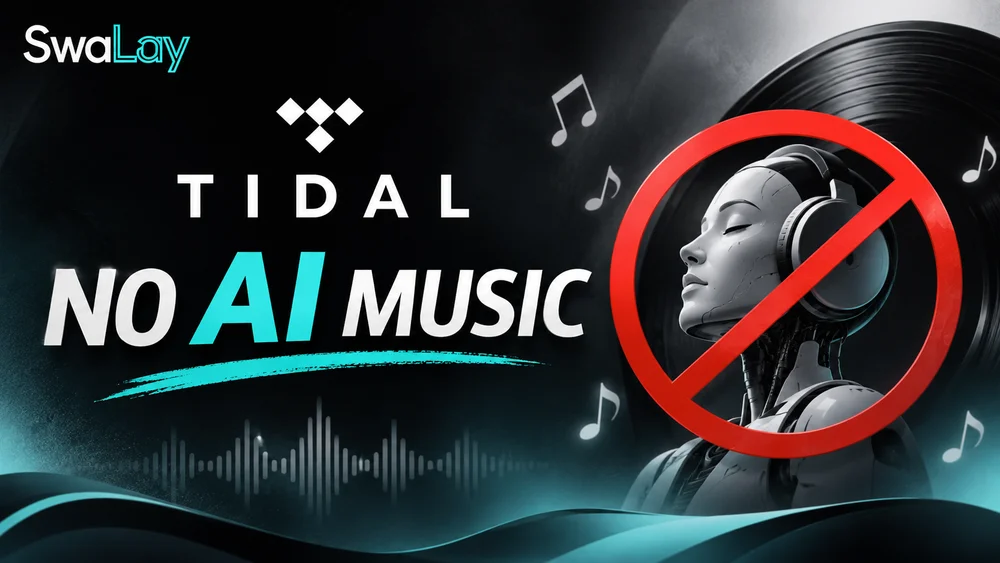
So, why is TIDAL taking such a firm position?
The company believes the rapid flood of AI-generated uploads is making it harder for genuine artists to get discovered. It also points to problems such as fake artist identities, impersonation and artificial streaming activity, which can divert attention and royalties away from legitimate musicians. TIDAL says it has already removed more than 65,000 tracks suspected of impersonating real artists.
However, there is an important distinction. TIDAL is not rejecting every song made with AI assistance. Artists can still use AI as a creative tool, provided the final recording is not entirely generated by AI. The restriction targets wholly AI-generated recordings.
This decision also sends a message to music distributors. They will no longer be able to deliver fully AI-generated tracks to TIDAL, making accurate content identification and metadata increasingly important.
For independent artists, the development raises an important question: as music creation becomes easier, will originality and genuine human contribution become even more valuable?
Streaming platforms are no longer just deciding which songs reach listeners. They are increasingly deciding what kind of music deserves a place in their catalogues.