
The way we consume music has changed dramatically over the past decade.
Once upon a time, fans would wait months for a new album, buy physical copies, and spend hours listening from the first track to the last. Albums weren't just collections of songs; they were experiences.
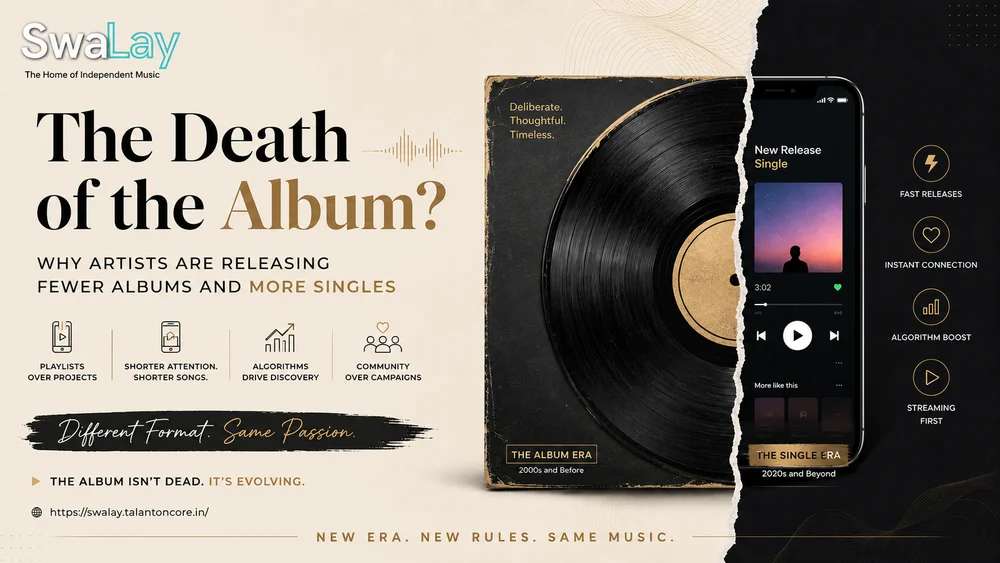
Today, streaming platforms have shifted the rules.
With millions of songs available instantly, listeners often discover music through playlists, recommendation algorithms, and short-form content. A single track can go viral overnight, reaching audiences that entire albums sometimes fail to attract.
As a result, artists are rethinking their release strategies.
The Rise of the Single Economy
Many independent musicians now prioritise singles over albums. Instead of disappearing for a year to create a full-length project, artists can release music consistently and remain visible to fans.
This approach offers several advantages:
More frequent engagement with audiences.
Better performance in streaming algorithms.
Lower financial risk.
Faster feedback from listeners.
For emerging artists, releasing one strong song every few weeks often creates more momentum than waiting years to launch an album.
Social Media Changed Everything
Platforms like Instagram Reels, YouTube Shorts, and other short-form video formats reward constant content.
A single song can fuel dozens of videos, challenges, edits, and fan-created content.
The attention economy moves quickly, and artists increasingly feel pressure to stay visible.
In this environment, singles fit naturally into modern consumption habits.
Are Albums Becoming Obsolete?
Not necessarily.
While singles dominate discovery, albums still offer something unique: storytelling.
Many artists continue to use albums to showcase artistic growth, explore deeper themes, and create immersive experiences that individual tracks cannot achieve alone.
For dedicated fans, albums remain powerful cultural moments.
The challenge is that fewer listeners are consuming music the way they did ten years ago.
The New Hybrid Model
Instead of choosing between singles and albums, many artists are combining both strategies.
They release multiple singles throughout the year, build audience momentum, and later package those tracks into a larger project.
This approach satisfies streaming algorithms while still allowing artists to create meaningful bodies of work.
For independent musicians, it may represent the best of both worlds.
Closing Thoughts
The album is not dying; it is adapting.
Streaming platforms have transformed how audiences discover music, encouraging artists to prioritise frequent releases and constant engagement. Yet albums continue to hold artistic value that singles alone cannot replace.
As the industry evolves, success may belong to artists who understand how to balance immediate visibility with long-term creative vision.
In a world obsessed with the next viral song, the challenge isn't just getting heard; it's creating music that listeners remember long after the playlist ends.
At SwaLay, we continue to support artists navigating the changing music landscape, helping them build sustainable careers in an industry that never stops evolving.