
A song can outlive the contract that made it famous. But what happens when the songwriter who originally signed away its rights wants those rights back?
That question has moved to the centre of a major music-industry legal story. On October 19, 2026, the US Supreme Court declined to hear a challenge brought by music publishers associated with BMG, Sony Music, Universal Music Group and Warner Music. The decision leaves standing a lower-court ruling that allowed songwriter Cyril Vetter to reclaim worldwide rights to the 1960s song Double Shot (Of My Baby's Love) under specific US copyright provisions.
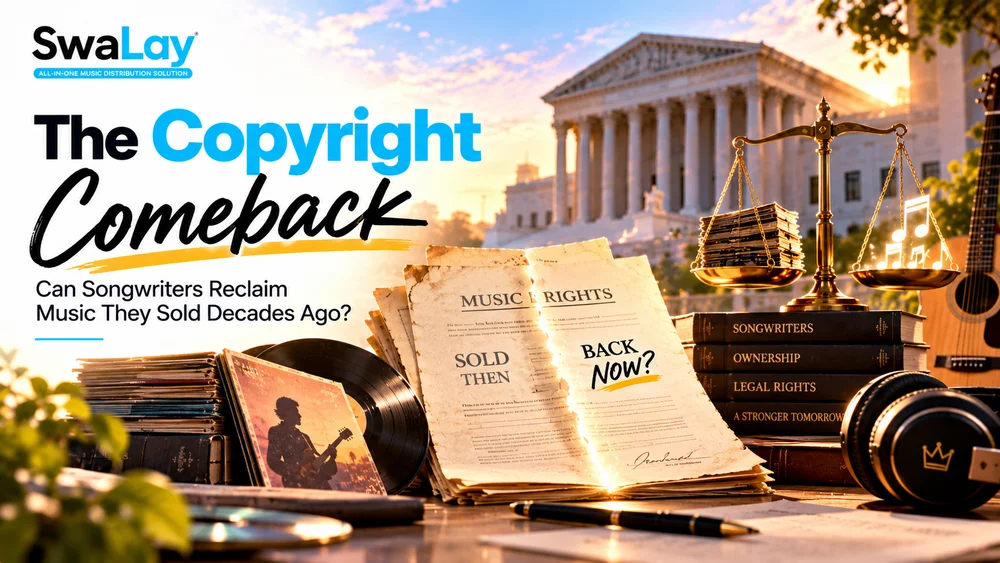
The little-known right behind the headlines
US copyright law gives eligible authors, under certain conditions, a way to terminate older copyright transfers and reclaim rights after decades. These provisions were designed partly to protect creators who signed agreements before their work became commercially valuable.
But this is not an automatic reset button. Eligibility depends on factors such as the agreement's date, the type of work and statutory deadlines. Works made for hire are generally excluded from these termination provisions.
Why the music business should pay attention
Music rights are often licensed, sold and valued across multiple territories. If a creator can reclaim rights worldwide in a qualifying case, publishers and rights buyers may need to examine old contracts, ownership records and future licensing assumptions more carefully.
The ruling does not mean every artist can reclaim every song, nor does it automatically change copyright rules in India. Its importance lies in the precedent left standing in this particular US dispute and the questions it raises for international rights deals.
The lesson for today's creators
For emerging musicians, the message is simple: understand what you sign before your music succeeds. Know which rights you transfer, for how long, in which territories and under what conditions they may return.
For music-service companies such as SwaLay, helping artists understand ownership, documentation and distribution rights is part of building a more transparent music ecosystem.
A song may become a hit overnight, but its contract can shape its future for decades. In the music business, knowing your rights may be just as valuable as owning the next big hit.