Music has become inseparable from social media. A trending Instagram Reel, YouTube video, or digital campaign can turn a song into a cultural phenomenon within hours. But behind this rapidly growing ecosystem is a serious issue that could be costing India's music industry hundreds of crores.
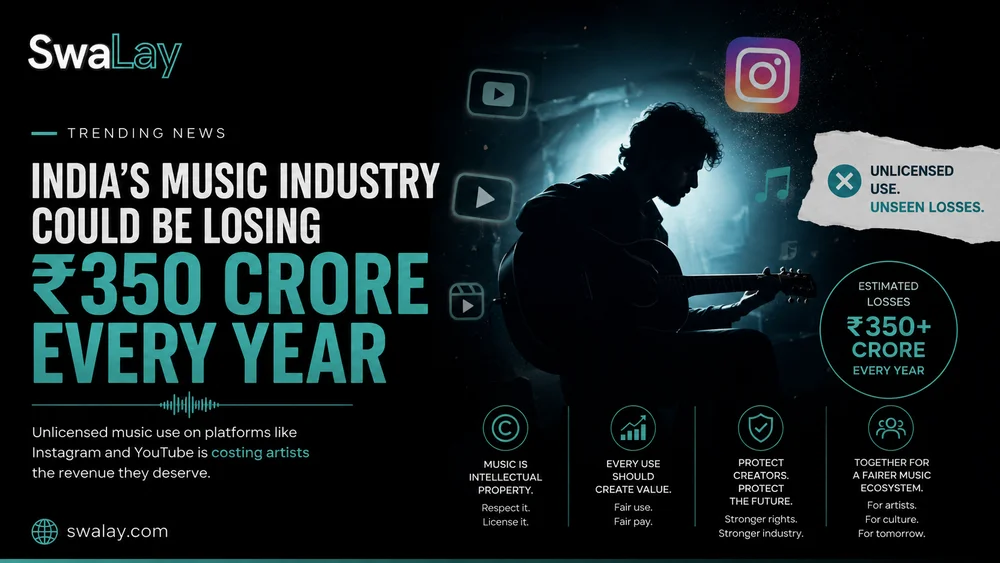
According to a recent report by ContentLens, India's music industry is estimated to lose more than ₹350 crore every year in sync revenue because copyrighted music is used commercially on platforms such as Instagram and YouTube without the appropriate licences.
Sync licensing allows music to be legally paired with visual content such as advertisements, films, web series, branded videos, and other commercial productions. When music is used without the required permission, creators and rights holders can lose revenue that should have been generated from those uses.
The problem becomes particularly complicated in the age of short form content. A song can appear in thousands of videos, brand campaigns, promotional posts, and creator collaborations. While some platform uses may be covered by existing licensing arrangements, commercial uses can require additional permissions depending on the circumstances and rights involved.
For independent artists, this conversation is especially important. A song is not simply a creative expression. It is also intellectual property and a potential source of long term income.
The growing use of music across digital platforms makes proper rights management more important than ever.
At SwaLay, we believe artists should understand the value of what they create and have access to systems that help protect and manage their music rights. Distribution is only one part of an artist's journey. Ensuring that music is properly represented, licensed, tracked, and monetised is equally important.
The next time a song becomes the soundtrack to a viral video, the real question should not only be how many people heard it.
It should also be whether the people who created it were fairly compensated.